
距截稿日期还有:
- 00 天
- 00 时
- 00 分
- 00 秒
ICEEES2026演讲嘉宾信息如下:
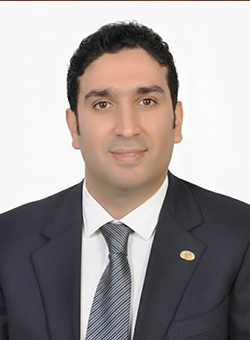
Dr. Mostafa Ghasemi Baboli, Professor
Yangtze Delta Region Institute (Huzhou), University of Electronic Science and Technology of China, Huzhou, China
Biography: Dr. Mostafa Ghasemi Baboli is a distinguished Professor of Chemical Engineering at the University of Electronic Science and Technology of China (UESTC), Yangtze River Delta Institute, Huzhou. He has been continuously recognized among the world’s top 2% of scientists by Stanford University since 2020, reflecting his sustained global research impact. In 2024, he was also selected as a Provincial Talent of Zhejiang Province, highlighting his contribution to scientific innovation and regional development in China. Professor Ghasemi is internationally recognized for his pioneering research in sustainable wastewater treatment, renewable energy systems, and advanced membrane science. His work focuses on developing energy-efficient, low-carbon technologies at the water–energy nexus, with particular emphasis on microbial fuel cells (MFCs), forward osmosis (FO), and nanocomposite membranes. His innovative research on hybrid MFC–FO systems and carbon nanotube-enhanced membranes has advanced the field of energy-positive water purification and desalination, improving efficiency, fouling resistance, and resource recovery. Before joining UESTC, Professor Ghasemi served as an Associate Professor at Sohar University, Oman, for five years, where he played an active role in academic leadership and interdisciplinary research. Earlier, he held academic appointments at Universiti Teknologi PETRONAS (UTP) as an Assistant Professor and at the National University of Malaysia (UKM) as a Senior Lecturer and Research Fellow. Professor Ghasemi has published extensively in high-impact international journals such as Energy, Renewable Energy and Desalination, and has co-authored influential studies on the intelligent optimization of bioelectrochemical systems, integrating artificial intelligence, computational modeling, and experimental validation. His research vision centers on circular water–energy systems, resource recovery, and climate-responsive technologies, positioning him as a leading figure in sustainable process engineering.
Topic: From Waste Treatment to Renewable Energy Production: A Next-generation Microbial Fuel Cell Concept
Abstract: Microbial fuel cells (MFCs) represent a promising renewable energy technology for simultaneous wastewater treatment and electricity generation; however, their practical deployment remains limited by pH imbalance, membrane cost, and long-term operational instability. In this study, a comprehensive comparative evaluation of cation exchange membranes (CEMs) and anion exchange membranes (AEMs) is conducted to elucidate their roles in governing electrochemical performance, stability, and bioelectrochemical functionality of MFCs. A low-cost PTFE-based AEM is benchmarked against the widely used Nafion 117 membrane under identical operating conditions using real palm oil mill effluent (POME) as the substrate. The results demonstrate that AEM-based MFCs exhibit superior power density, reduced charge transfer resistance, and significantly enhanced long-term stability over extended operation exceeding 600 h. These improvements are attributed to efficient OH? transport, which enables intrinsic pH self-regulation at both electrodes, mitigates anode acidification, and promotes favorable conditions for oxygen reduction at the cathode. In contrast, CEM-based systems suffer from pronounced pH gradients and performance decay. Beyond material comparison, this work highlights a paradigm shift in MFC design, positioning membranes as active electrochemical regulators rather than passive separators. The findings provide critical insights into membrane-driven control of microbial and electrochemical processes and establish AEM-enabled MFCs as a next-generation platform for stable and scalable renewable energy recovery from wastewater.

添加组委会微信
(王老师)
© 2015-2026第十三届能源,环境与地球科学国际会议 版权所有
